VOLUNTEERING: SOLIDARITY AND BROTHERHOOD
Our cities are inhabited by a growing number of people in conditions of hardship, poverty, and marginalization, more or less visible. These are situations that until recently seemed far away from us, but which now touch us personally and may provoke in us reactions of indifference or intolerance.
But the “strangers on the road,” as Pope Francis has called them, are people—people experiencing hardship whose dignity is not recognized from a social (lack of integration) and/or institutional perspective.
The very concept of personhood entails the recognition of the value and dignity of an individual; it is through such recognition that we relate to others: I recognize in you a person, your identity, your worth.
Being in solidarity with those living on the margins therefore first of all means paying attention: we notice that the other is in difficulty and in need only if we step out of our comfort zone and adopt a perspective of welcome and integration.
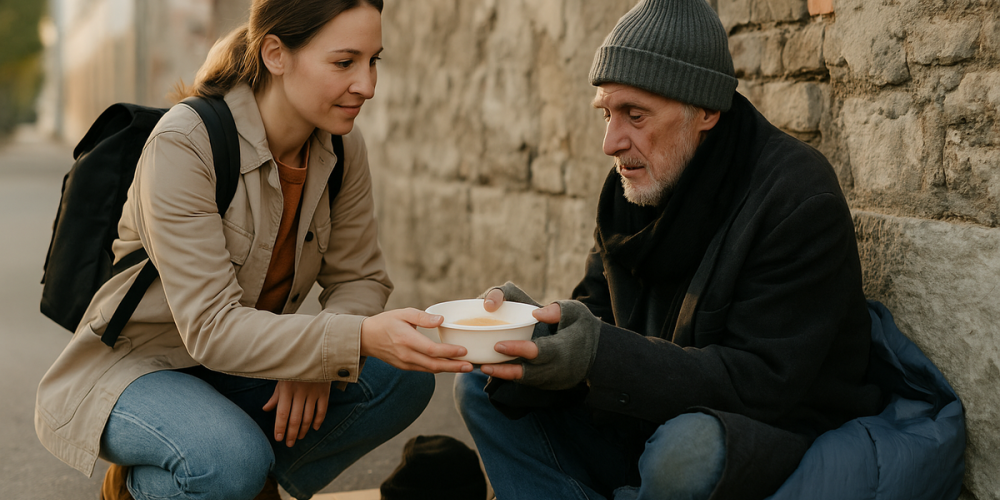
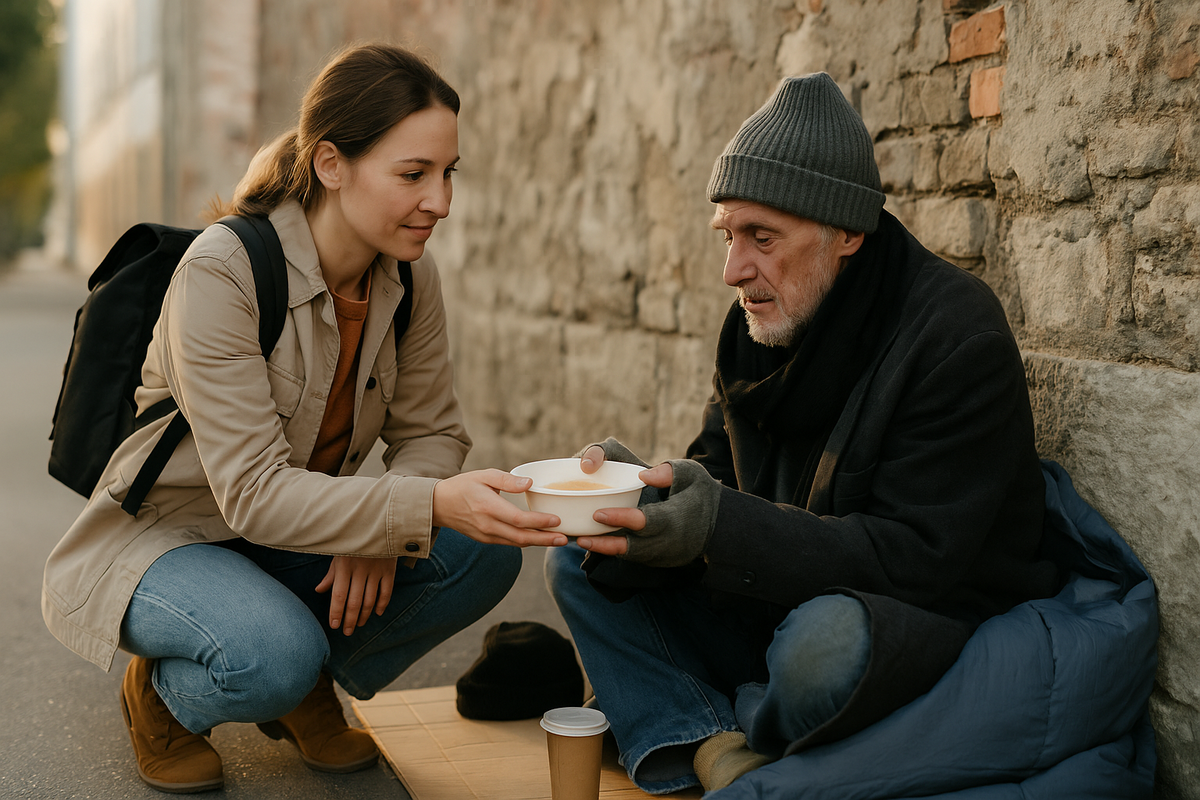
It is a common idea that volunteering is limited to “simple” assistance (distribution of food, clothing, etc.). In reality, in showing solidarity with the marginalized, we put ourselves at stake: it is about experiencing an encounter, making space for the other, entering into that empathy without which concrete action would lose its meaning and become sterile.
Not “I give you,” but “I meet you”: I am aware of your hardship, but I also believe in your value and I try, as much as possible, to adopt an attitude of listening, solidarity, brotherhood, and even learning.
Pope Francis has described fraternity as something more than solidarity (cf. Fratelli tutti, n. 129), since recognizing one another in mutual diversity and living that diversity as a richness is an intrinsic value of being human persons.
In the distribution of food and other comforts at the Parma Station—an initiative organized by the Community of Sant’Egidio in which we participate together with some Xaverian sisters—this “mutual recognition” takes place. Often our friends at the station notice if one of us is absent, they ask about our health if they hear of any illness… and at times they themselves help with the distribution or with loading and unloading activities.
Being attentive therefore also means being available to listen and to engage in relationships, to learn their stories or simply to stop and chat about everyday matters.
And a look, a “thank you,” a confidence shared, or an attitude of trust received are for us a great richness and a precious gift. Do they mean that a bond has been created? We hope so, and we wish that we might go beyond the relationship between giver and receiver. “May God grant that in the end there are no longer ‘others’ but only ‘us’” (Pope Francis, Fratelli tutti, 35).